Newsletter
Issue 19 | 06,2026
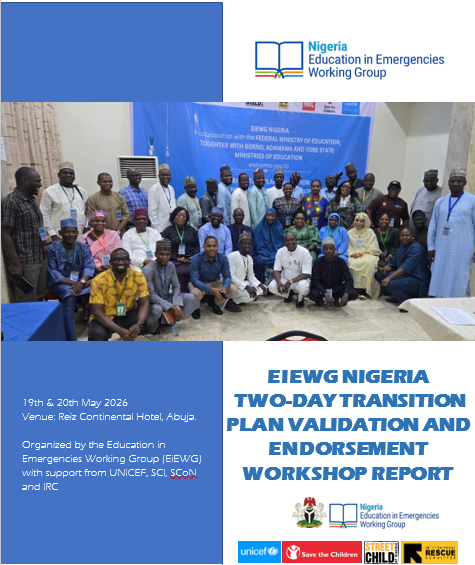
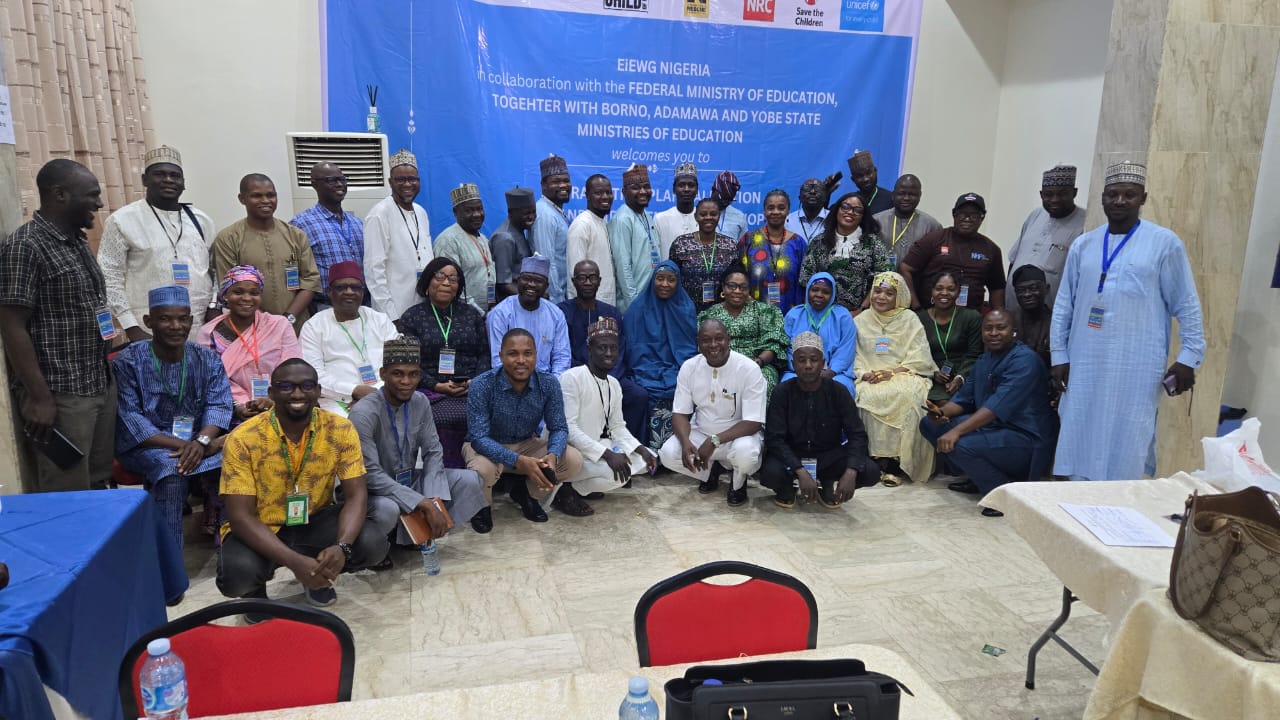
The Education in Emergencies Working Group (EiEWG) Nigeria convened the Two-Day EiEWG Transition Plan Validation and Endorsement Workshop in Abuja from 19th–20th May 2026 to support the ongoing transition toward strengthened government ownership and sustainability of EiE coordination mechanisms in Nigeria. The workshop was organized in recognition of the need to strengthen institutional capacities, harmonize coordination structures, and establish a clear roadmap for the transition of EiE coordination responsibilities from humanitarian-led structures toward sustainable government-led systems. The engagement also provided a platform for stakeholders to review, validate, and collectively endorse the draft Transition Plan and Roadmap. The transition process aligns with broader efforts to strengthen the nexus between humanitarian and development approaches within the education sector while ensuring sustainability, national ownership, accountability, and long-term resilience of education coordination systems in conflict-affected contexts.
- Review and validate the EiEWG Transition Plan and coordination structure;
- Strengthen shared understanding of transition priorities and implementation arrangements;
- Identify institutional and coordination gaps affecting post-transition sustainability;
- Develop recommendations for capacity strengthening among key government and sector stakeholders;
- Harmonize stakeholder inputs and update the transition roadmap;
- Promote stronger collaboration between humanitarian, development, and government actors;
- Secure formal endorsement of the Transition Plan and Roadmap for implementation.
Summary of Proceedings
Day 1: Review of the Transition Plan
The first day of the workshop commenced with participant registration followed by an opening session featuring welcome remarks from the Federal Ministry of Education (FME), goodwill messages and keynote remarks delivered by government representatives. The opening session emphasized the importance of strengthening sustainable and government-led coordination mechanisms for Education in Emergencies (EiE) in Nigeria. This was followed by a presentation on the overview and objectives of the workshop, which outlined the purpose, scope, expected outcomes, and strategic priorities of the transition process. Participants were subsequently taken through the Nigeria EiEWG Transition Plan, including the rationale for transition, proposed coordination structures, implementation milestones, and sustainability priorities. A breakout session was then conducted to review institutional capacities and identify gaps among key stakeholders, including the Federal Ministry of Education, State Ministries of Education, SUBEBs, and national NGOs. Discussions focused on identifying challenges affecting post-transition coordination, institutional preparedness, and capacity strengthening needs required to sustain EiE coordination mechanisms. Participants also proposed practical recommendations to strengthen preparedness, coordination systems, and government ownership.
The findings and recommendations from the breakout sessions were presented during plenary discussions, allowing participants to collectively review, validate, and harmonize key recommendations. Additional breakout discussions were held to refine and update the Transition Plan based on stakeholder inputs and recommendations generated during plenary sessions. The day concluded with a plenary presentation consolidating key recommendations, agreed action points, and priority areas requiring further attention in the final transition roadmap.
Day 2: Endorsement of the Transition Plan and Roadmap
The second day commenced with a recap of the previous day’s discussions, key resolutions, and action points. Participants then reviewed the updated EiEWG Transition Plan, which had been revised to reflect stakeholder recommendations and inputs from the breakout and plenary sessions conducted on Day One. This was followed by a detailed presentation and discussion on the Transition Roadmap, highlighting implementation milestones, timelines, benchmarks, and priority actions required to operationalize the transition process. Participants deliberated on implementation strategies, coordination arrangements, and mechanisms for monitoring progress during the transition period. A final review session was conducted to validate and adopt feedbacks. The workshop concluded with a summary of key resolutions, implementation priorities, and agreed next steps. Closing remarks reaffirmed stakeholders’ collective commitment to strengthening sustainable, coordinated, and government-led Education in Emergencies response mechanisms across Nigeria.